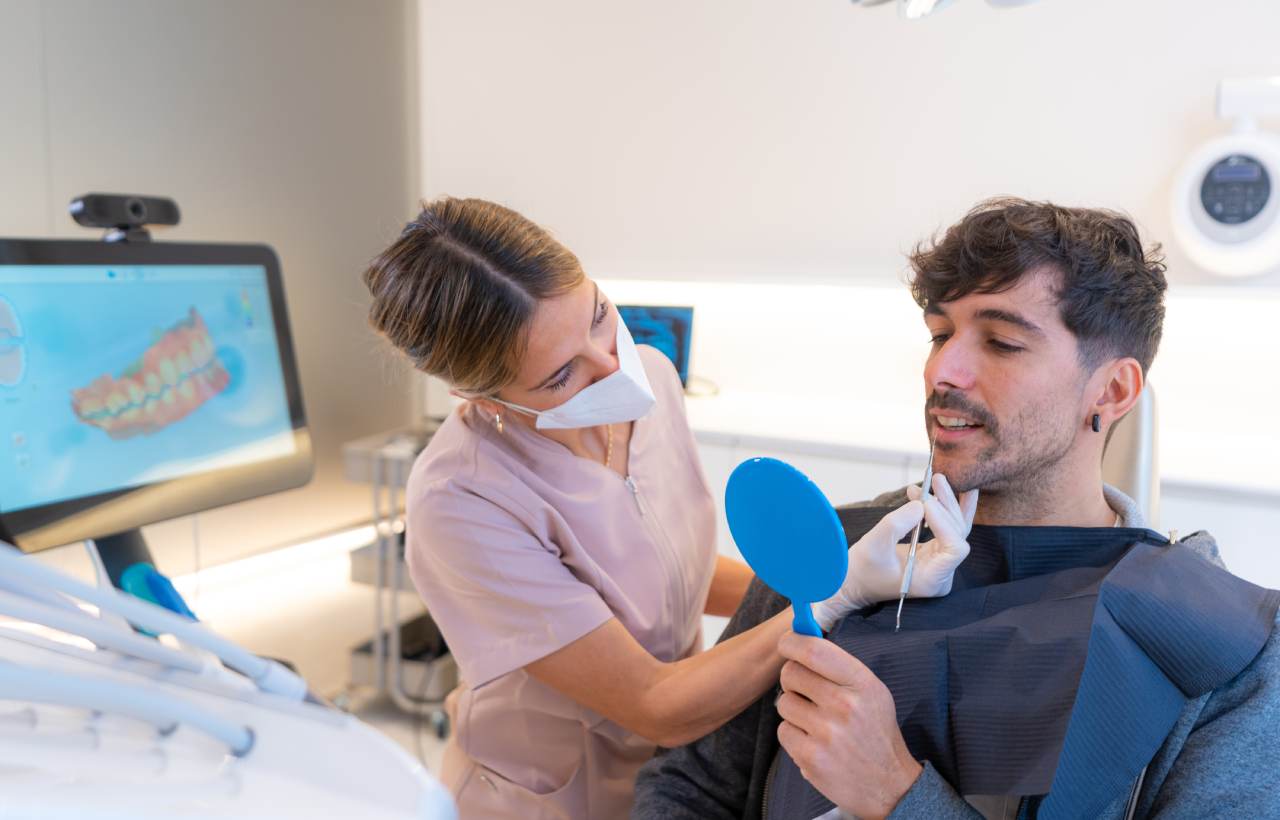
Most adults have heard “twice a year” so many times it feels like a law. It isn’t. How often you should go to the dentist depends on your health history, your habits, and your actual risk level, not a number a toothpaste company popularized in the 1950s.
The Standard Answer (And Why It Doesn’t Apply to Everyone)
According to the CDC, nearly 40% of adults skipped a dental visit in the past year. The reasons vary: cost, anxiety, no perceived problem. But the most common assumption underneath all of those reasons is that twice-a-year visits are either overkill or just the default everyone follows.
The “every six months” rule traces back to mid-20th century advertising, not clinical research. It became standard because it was easy to remember and good for business, not because studies showed it was the right interval for every person. The real answer is more useful: your visit frequency should reflect your individual risk for decay, gum disease, and other oral health conditions.
Why Regular Dental Visits Matter More Than Most People Realize
A 2019 study published in the Journal of Dental Research, analyzing data from over 26,000 adults, found that patients who attended regular dental checkups were significantly more likely to have early-stage decay and gum disease caught before it required complex treatment. The connection between oral health and systemic conditions like diabetes and cardiovascular disease is well-documented, with the American Heart Association noting that gum disease bacteria can enter the bloodstream and contribute to inflammation affecting the heart.
What your dentist is actually doing at a routine visit goes well beyond polishing teeth. The exam includes measuring gum pocket depth, checking for early bone loss, screening for oral cancer, and evaluating changes in tissue that you would never see or feel at home. Understanding what those appointments actually involve can change how you think about skipping one.
The practical takeaway: a routine visit catches the problems that cost the least to fix. A small cavity treated early is a filling. The same cavity ignored for two years can become a root canal or an extraction.
How Often Should You Go to the Dentist Based on Your Risk Level
Risk-based recall scheduling is the clinical standard that dental associations now support over fixed intervals. A 2020 systematic review published on PubMed (NCBI) concluded that recall intervals tailored to individual risk factors produced better outcomes than uniform six-month schedules for all patients. Three general tiers capture most situations.
Low-risk patients can often extend to every 12 to 18 months. Moderate-risk patients benefit from the traditional six-month schedule. High-risk patients need visits every three to four months to stay ahead of active disease.
Low-Risk Patients
Low risk means no new cavities in recent years, consistently healthy gum measurements, strong home hygiene habits, no tobacco use, and no conditions that affect saliva production. For patients who genuinely fit this profile, extending the recall interval to 12 or even 18 months is supported by evidence and is not neglect.
The action here is simple: ask your dentist directly at your next visit. Show your chart and ask whether your history justifies a longer interval. A good clinician will give you a straight answer based on what they see, not a default schedule.
High-Risk Groups Who Need More Frequent Care
Smokers, diabetics, patients with a history of periodontal disease, people taking medications that cause dry mouth, and pregnant women all face accelerated rates of dental disease. A 2021 study in the Journal of Clinical Periodontology tracking 1,800 patients with Type 2 diabetes found that those with poorly controlled blood sugar had three times the rate of gum disease progression compared to non-diabetic patients over a two-year period.
In Roxboro and surrounding Person County communities, tobacco use and diets high in soft drinks and sugary foods are common patterns that increase decay risk substantially. Dry mouth from medications compounds this by removing saliva’s natural buffering effect against acid. If any of these factors apply to you, ask your dentist to assign a specific recall interval at your next appointment rather than defaulting to whatever the front desk schedules.
Dental Visit Frequency for Kids and Teens
The American Academy of Pediatric Dentistry recommends a child’s first dental visit by their first birthday or within six months of the first tooth appearing. Starting early matters because decay in baby teeth affects spacing and development of permanent teeth, and because it establishes the habit before fear has a chance to set in.
Kids and teens often need closer monitoring during growth phases and orthodontic treatment, when hardware makes cleaning harder and risk goes up. Keeping the whole family on a consistent schedule is easier when visits are treated as routine rather than reactive. For parents in the Roxboro area: if your child complains of tooth sensitivity, has visible spots on teeth, or starts mouth-breathing regularly, don’t wait for the next scheduled visit. Those are signals to call sooner.
What Actually Happens at a Dental Checkup
A standard exam includes a professional cleaning, periodontal measurements, X-rays on a clinically appropriate schedule (not necessarily every visit), an oral cancer screening, and an evaluation of existing restorations. The full breakdown of what a checkup includes demystifies the appointment for anyone who has been putting it off.
According to the Oral Cancer Foundation, roughly 54,000 Americans are diagnosed with oral cancer annually, and dentists identify a significant share of those cases during routine exams. The visit is diagnostic. Skipping it delays detection, not just cleaning.
Patients who stretch their recall interval to two or three years often arrive needing deep cleanings or restorations that could have been avoided. What starts as a minor buildup becomes hardened tartar below the gumline. What starts as a small soft spot becomes a cavity requiring a crown. Routine cleanings prevent that kind of escalation in a way that home brushing alone cannot.
What to Try This Week
Call your dental office and ask one question: “Based on my history, what recall interval do you recommend for me?” That single question replaces a year of guessing with a personalized answer. It takes sixty seconds and gives your dentist the opening to tell you whether twice a year is right for you, or whether your situation calls for something different.
Frequently Asked Questions
Is once a year enough for a dental visit?
For most adults, once a year is not enough. Low-risk patients with a strong hygiene history and no active disease may qualify for a 12 to 18-month interval, but that determination should come from your dentist after reviewing your chart, not from a general assumption. Many conditions progress without symptoms, which is exactly why more frequent monitoring exists.
What happens if you skip the dentist for several years?
Patients who go two or three years without a visit frequently need more involved treatment when they return: deep cleanings to address tartar buildup below the gumline, fillings for decay that has progressed, or in some cases, extractions. Getting back on track usually requires more appointments upfront before returning to a standard recall schedule.
Does dental visit frequency change as you age?
Yes. Older adults often take more medications, many of which cause dry mouth that accelerates decay. Gum recession exposes root surfaces that are more vulnerable than enamel. These factors often push seniors into a higher-risk category that benefits from more frequent visits, even if they had clean checkups for decades prior.
How often should children go to the dentist?
Children should have their first visit by age one, then follow a schedule recommended by their pediatric dentist based on development and risk. During active growth and orthodontic phases, visits every four to six months are common. Frequency adjusts as the child’s oral health picture becomes clearer over time.
Can good brushing and flossing reduce how often you need to visit?
Strong home hygiene reduces your risk level and can support a longer recall interval for qualifying patients. It does not eliminate the need for professional cleanings and exams. Tartar that forms below the gumline cannot be removed with a toothbrush, and early decay or tissue changes require clinical detection. Home care and professional visits work together, not as substitutes for each other. Keeping up with habits between visits makes each appointment more straightforward.