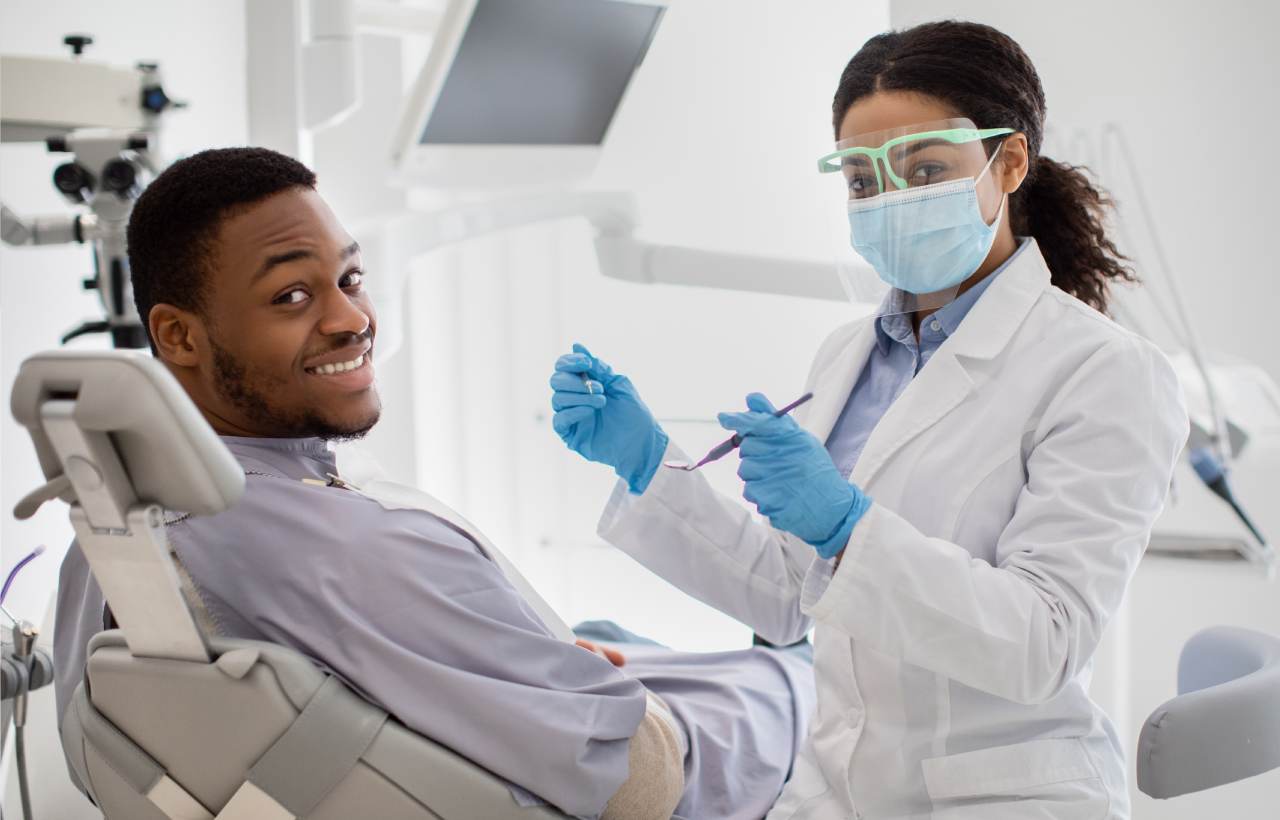
Dental fear is more common than most people realize, and it keeps millions of adults from getting care they genuinely need. If you’re trying to figure out how to get over fear of going to the dentist, you’re not starting from scratch , you’re starting from the same place a lot of people do, and there’s a clear path forward.
In this guide, you’ll learn:
- What dental anxiety actually is, and how it differs from dental phobia
- Why avoidance makes the problem worse over time
- The four root causes of fear, with practical reframes for each
- How to find a dentist who works well with anxious patients
- Relaxation and sedation options that genuinely help
- Exactly what to say when you call or sit down in the chair
What Dental Fear Actually Is (And Why It’s So Common)
A 2020 systematic review published in the Journal of Dental Research, analyzing data from over 60,000 adults across multiple countries, found that roughly 15 to 20 percent of people experience dental anxiety significant enough to cause them to avoid care. You are not in a small minority. Dental anxiety is one of the most prevalent health-related fears in adults.
Dental anxiety and dental phobia are related but different. Dental anxiety is the apprehension and dread that builds before or during dental appointments. Dental phobia is more intense: it’s a persistent, irrational fear that leads to complete avoidance, regardless of the oral health consequences. Both are real, both are valid, and both respond well to the right strategies.
Normalizing this experience matters because shame compounds the problem. Many people avoid the dentist not just because they’re afraid of the chair, but because they’re embarrassed that they’re afraid. Recognizing that dental fear is a common, well-documented psychological response removes one layer of the barrier.
Why Avoiding the Dentist Makes Everything Worse
A 2016 study published in BMC Oral Health, following 3,400 adults over ten years, found that patients who avoided dental care due to anxiety had significantly higher rates of tooth loss, untreated decay, and gum disease than non-avoidant patients , and the gap widened with every year of avoidance. The research also flagged connections to systemic health: untreated periodontal disease is linked to increased cardiovascular risk and poorer blood sugar control in people with diabetes.
The avoidance loop works like this: fear causes you to skip appointments, which allows small problems to become larger ones, which increases shame about the state of your teeth, which makes the thought of going even more overwhelming, which reinforces the fear. Understanding what that timeline actually looks like helps break the cycle, because naming the pattern is the first step to stepping out of it.
The practical takeaway: avoidance is not a neutral choice. It is a decision that compounds dental problems over time. Recognizing that is not meant to pressure you , it’s meant to give you accurate information so that taking one small step feels worth it.
What’s Really Behind Your Fear
Dental fear rarely comes from nowhere. Research consistently identifies four primary drivers, and knowing which one affects you most directly shapes what to do about it.
Fear of Pain
A 2019 study in the Journal of Endodontics tested patient-reported pain expectations against actual pain experienced during routine procedures. Patients expected pain levels around 6 out of 10. Actual reported pain averaged 2.4 out of 10. The gap between anticipation and reality is consistently larger than most people expect.
Modern local anesthetics are highly effective. Topical numbing is applied before any injection. Techniques have changed considerably from what many adults remember from childhood dentistry. The practical move: tell your dentist before the appointment begins that pain is your primary concern. A good dental team will adjust pace, explain each step before doing it, and check in with you throughout.
Fear of Losing Control
A 2017 study in Frontiers in Psychology, surveying 1,200 dental-phobic adults, found that perceived lack of control was the single strongest predictor of avoidance behavior , stronger than pain expectation. When you’re reclined, mouth open, unable to speak, and unable to see what’s happening, the feeling of helplessness is real.
The fix is straightforward: establish a stop signal before the appointment starts. Raise your left hand, and the dentist stops immediately, no questions asked. This one technique has measurable effects on anxiety scores in clinical settings. It costs nothing to set up, and it changes the power dynamic completely.
Embarrassment About Your Teeth
A 2021 survey by the American Dental Association found that 42 percent of people who had avoided the dentist for two or more years cited embarrassment about their oral health as a primary reason. Shame about teeth is extremely common among people who have delayed care , which creates a paradox where the longer you wait, the more embarrassed you feel, and the harder it becomes to go.
Dentists who work with anxious and long-term-avoiding patients see this presentation constantly. It is not unusual. The state of your teeth after years of avoidance is not a reflection of your character , it is a predictable outcome of a fear response. A dentist focused on gentle, judgment-free care is not surprised by what they find, and they are not there to lecture you about it.
A Bad Experience in the Past
Negative conditioning is neurologically real. A single painful or frightening dental experience , especially one from childhood , can create lasting associative fear that activates every time the context is similar. A 2018 study in the European Journal of Oral Sciences confirmed that childhood dental trauma is one of the strongest predictors of adult dental avoidance.
The practical move here is to find a different practice with explicit trauma-aware communication, rather than forcing yourself back to a context that triggers the same response. Explaining your past experience on the first call matters , a practice that listens carefully and responds with patience rather than dismissal is a fundamentally different environment from the one that caused the problem.
How to Find the Right Dentist for Anxious Patients
A 2019 study in the Journal of Dental Education, analyzing data from 2,800 patients, found that the quality of the patient-provider relationship was the strongest predictor of whether anxious patients kept their appointments. More than technique, more than technology , it was communication style and feeling genuinely heard.
What to look for: a dentist who explains what they’re doing before they do it, who asks about your anxiety history during the intake process, who doesn’t rush, and whose staff treats your fear as reasonable rather than inconvenient. Finding a dentist who works gently with nervous patients is worth treating as a non-negotiable, not an optional preference.
When you call a new practice, say this: “I have significant dental anxiety and haven’t been in a while. How does your office handle patients who are nervous?” The answer tells you everything. A practice accustomed to anxious patients will respond with specifics. One that isn’t will give you a generic answer or pivot quickly to scheduling.
Relaxation Techniques That Actually Work Before and During Your Appointment
A 2020 randomized controlled trial published in the Journal of Dental Anxiety and Stress tested diaphragmatic breathing against a control group in 98 dental patients with moderate to severe anxiety. The breathing group showed significantly lower cortisol levels and lower self-reported anxiety scores before and during procedures.
The physiological mechanism is direct: slow, deep breathing activates the parasympathetic nervous system, which counteracts the fight-or-flight response. Your heart rate slows, your muscles release tension, and your perception of threat decreases.
The specific pattern to use in the chair: inhale through your nose for four counts, hold for two, exhale through your nose for six counts. Repeat. You don’t need to tell anyone you’re doing it. You don’t need silence or special conditions. It works during treatment, not just in the waiting room.
Sedation and Medication Options Worth Knowing About
The American Dental Association estimates that over 30 percent of dental-phobic patients report that sedation options were never explained to them by a provider. That’s a gap worth closing before your next appointment.
Nitrous oxide (commonly called laughing gas) is the most accessible option. It’s inhaled through a small mask, takes effect within minutes, reduces anxiety without putting you to sleep, and wears off quickly enough that you can drive home afterward. Oral anxiolytics , prescription medications like diazepam , are taken an hour before the appointment and reduce anxiety significantly; you’ll need a ride home. Conscious sedation is deeper and administered intravenously, typically for longer procedures or severe phobia cases. General anesthesia is reserved for the most complex situations or for patients who cannot cooperate with treatment while awake.
Which option suits you depends on the severity of your anxiety and the type of procedure. The important thing is to have this conversation before the day of your appointment, not while you’re already in the chair. Ask about it during your initial call or consultation.
Practical Moves for the Day of Your Appointment
A 2015 study published in Chronobiology International, tracking anxiety levels in 400 dental patients across appointment times, found that morning appointments produced significantly lower anticipatory anxiety across the day compared to afternoon or evening slots. When the appointment is at 8 a.m., there are fewer hours for the dread to build.
Arrive ten minutes early. Not to sit in the waiting room longer, but to settle your nervous system before you walk in. Rushing from a stressful commute directly into the chair compounds anxiety. Bring headphones and a playlist you know well , familiar music reduces perceived stress during procedures, and having something to focus on other than ambient dental sounds helps. Leaning on a few reliable strategies on the day itself makes a measurable difference when your nervous system is already on high alert.
If it helps, bring a person you trust. Their presence in the waiting room, or sometimes in the room itself depending on the practice, is a legitimate comfort strategy, not a sign that you can’t handle it alone.
How to Talk to Your Dentist About Your Fear
A 2022 study in Patient Education and Counseling, analyzing 1,600 dental visits, found that patients who disclosed anxiety before the procedure began reported 34 percent lower anxiety scores after the appointment compared to patients who said nothing. Disclosure works.
The barrier is usually not knowing what to say. Here’s the language that works: when you call, say “I have dental anxiety and I want to find a practice that’s experienced with nervous patients.” When you sit down, say: “I get anxious during appointments. I’d like us to agree on a hand signal I can use if I need a break.”
That’s it. You don’t need to explain your whole history. You don’t need to apologize. One sentence at the start of the appointment changes the entire dynamic. And if you’re not sure how to approach the conversation, there are practical ways to tell your dental team you’re nervous without it feeling awkward or overly formal.
What to Try This Week
The research on behavior change is consistent on one point: the hardest part is starting, and momentum matters more than perfection. You don’t need to be fearless before you make the call. You just need to make the call.
This week, find one dental practice, call during business hours, and ask: “Do you have experience working with patients who have dental anxiety?” That one question, that one phone call, is the smallest possible first step. It doesn’t commit you to an appointment. It doesn’t require you to explain everything. It just opens the door.
Knowing what to expect when you finally go back can make that first appointment feel far less uncertain. You’ve already done the harder work by understanding what’s driving your fear. Now it’s just one phone call.