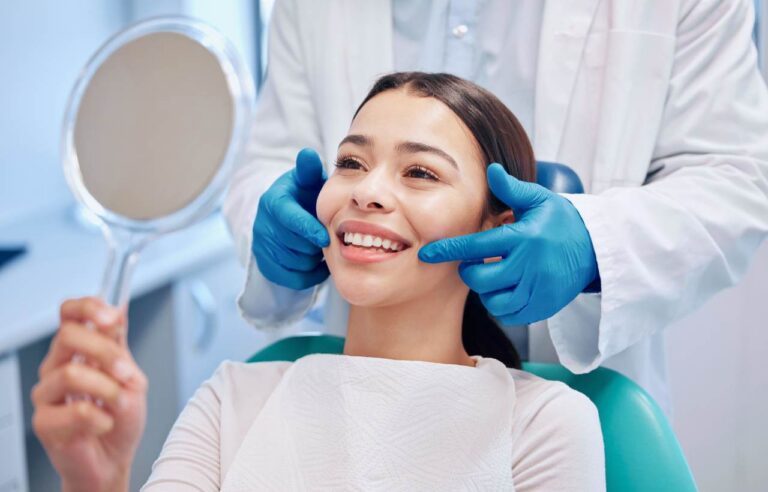
Understand preventive dental care
Preventive dental care services help you maintain healthy teeth and gums, reducing the need for invasive and costly procedures down the road. Preventive dentistry, as defined by Cigna, includes dental exams, cleanings and patient education, combined with daily habits like brushing and flossing starting in childhood and continuing through adulthood. By investing in preventive care today, you can avoid spending more on fillings, crowns or root canals later.
Benefits of preventive dental care services include:
- Reducing cavities and enamel wear
- Preventing gum disease and gingivitis
- Lowering the risk of bacteria entering the bloodstream and affecting overall health [1]
- Catching early warning signs like oral cancer or tooth decay when treatment is most affordable
According to the University of Illinois at Chicago College of Dentistry, one in four American adults has untreated tooth decay, underscoring the importance of prevention [2]. Cavities remain the most common chronic health problem in U.S. children—five times more common than asthma and seven times more common than hay fever [2].
Schedule routine dental visits
Your oral health foundation begins with regular appointments. Most people benefit from visits every six months unless your dentist recommends a different schedule based on your risk factors.
Professional teeth cleaning
During a professional cleaning, your dental hygienist removes plaque and tartar buildup that daily brushing cannot reach. These sessions are part of our dental hygiene services and help prevent cavities, gum inflammation and bad breath.
Comprehensive dental exam
A comprehensive dental exam includes a thorough evaluation of your teeth, gums and soft tissues. During the exam, your dentist will:
- Review your medical and dental history
- Perform an oral cancer screening
- Check for tooth decay and restoration integrity
- Conduct a periodontal assessment
- Recommend digital x-rays when needed to spot hidden issues
Frequency recommendations
- Standard risk patients: every six months
- Higher risk (history of cavities or gum disease): every three to four months
- Children: twice yearly starting with the first tooth
By following these guidelines, you can catch small problems before they become big ones and keep your treatment costs low.
Practice daily oral hygiene
Consistent home care is the cornerstone of preventive dental care services. Good habits reinforce professional treatments and protect your investment.
Brushing techniques
- Brush at least two times a day for at least two minutes
- Use a soft-bristled toothbrush and fluoride toothpaste
- Angle the brush at 45 degrees toward the gum line
- Use gentle circular strokes across all tooth surfaces
Flossing tips
- Floss at least once daily, gently sliding the floss between teeth
- Curve the floss around each tooth, moving it up and down to remove plaque
- Consider water flossers if traditional floss is challenging
ADA-approved products
Choose products bearing the ADA Seal of Acceptance to ensure they have passed rigorous safety and efficacy standards. Your dentist can also recommend specialty mouthwashes or interdental cleaners based on your needs.
Consider preventive treatments
Targeted in-office therapies can further strengthen defenses against decay and gum disease.
Fluoride treatments
Fluoride treatments remineralize enamel and inhibit acid production by bacteria, making your teeth more resistant to decay [3].
Benefits for enamel
- Enhances resistance to acid attacks
- Reduces the likelihood of new cavities
Treatment overview
A quick, noninvasive procedure completed in one appointment by your fluoride treatment dentist. Treatments may be recommended twice a year, depending on your risk level.
Dental sealant application
Sealants provide a protective barrier on the chewing surfaces of molars, where grooves can trap food and bacteria. A systematic review shows sealants can reduce caries incidence by over 70% [4]. According to the CDC, children without sealants have almost three times more cavities than those with sealants [2].
Benefits for children and adults
- Shields deep grooves from plaque and bacteria
- Offers protection for up to 10 years with routine monitoring
Application process
After cleaning and drying the tooth, resin is painted into the grooves and cured with a dental light. The procedure takes 30 to 60 minutes and is completely painless. Learn more about dental sealant application.
Cost-effectiveness of sealants
Sealant programs not only prevent cavities but also reduce parental productivity losses by avoiding unplanned dental visits [2].
Monitor oral health risks
Regular assessments help you detect changes early and adapt your care plan.
Gum disease evaluation
Nearly half of adults over age 30 show signs of gum disease, making routine checks essential [5]. Your gum disease evaluation dentist will measure pocket depths, check for bleeding and recommend treatment to halt disease progression.
Oral cancer screening
An oral cancer screening dentist examines your lips, tongue and throat for irregularities. Early detection of oral cancer dramatically improves treatment outcomes.
Leverage diagnostic tools
Advanced imaging reveals issues that might otherwise go unnoticed.
Digital dental x-ray exam
A digital dental x-ray exam uses lower radiation than traditional film x-rays to detect decay between teeth, assess bone levels and plan treatments with precision.
Other imaging technologies
Depending on your condition, your dentist may recommend:
- Intraoral cameras for detailed tooth surface views
- Cone beam CT scans for three-dimensional imaging of bone and root structures
Explore insurance coverage
Understanding your benefits can unlock significant savings on preventive care.
Preventive services coverage
Most dental insurance plans cover preventive dental care services at 100% with no deductibles or copays [6]. Preventive benefits typically start immediately, with no waiting periods for new members.
Out-of-pocket savings
Preventive care is more affordable than restorative or emergency treatments. By addressing issues early, you avoid higher fees for fillings, crowns or extractions [1].
| Service | Average cost (2023–2024) | Typical coverage |
|---|---|---|
| Routine exam & cleaning | $203 ($50–$350) | 100% covered |
| Fluoride treatment | $25–$50 | 80–100% covered |
| Dental sealant (per tooth) | $30–$60 | 80–100% covered |
Partner with Rox Dental Studio
Let us be your ally in preventive oral health.
Welcoming new patients
Schedule a new patient dental exam with our friendly team. We are a dentist accepting new patients and committed to making your first visit comfortable and comprehensive.
Family dentistry services
Our family dentistry services cater to patients of all ages. From children’s first teeth to adult maintenance, we offer expert care and guidance.
Personalized preventive plan
We develop a tailored schedule based on your oral health history, lifestyle and risk factors. Whether you need a routine dental checkup every six months or more frequent visits, we’ll ensure you have the support and education needed to maintain a vibrant smile.
Looking for preventive oral care near me? Contact Rox Dental Studio today to protect your smile and avoid costly treatments through proactive preventive dental care services.